Kelan Phil Cohran
Musician, Scholar, Educator, Astronomer, Inventor, and Cultural Visionary

Life and Legacy
Musician, Scholar, Educator, Astronomer, Inventor, and Cultural Visionary
Kelan Phil Cohran devoted his life to the pursuit of knowledge, the advancement of African cultural heritage, and the transformative power of music. His legacy lives on through his compositions, his students, his family, and the generations of artists and thinkers inspired by his vision.
A Life Dedicated to Music, Knowledge, and Cultural Advancement
Kelan Phil Cohran was a pioneering musician, composer, educator, inventor, musicologist, cultural historian, and independent scholar whose influence extended far beyond the boundaries of jazz. A central figure in Chicago’s creative music movement, Cohran dedicated his life to exploring the profound relationships among music, African history, science, mathematics, astronomy, spirituality, and human development.
Born in Mississippi and raised in St. Louis, Cohran developed his musical voice within the rich traditions of American jazz before establishing himself as one of Chicago’s most distinctive artistic and intellectual forces. His journey brought him into contact with some of the most influential musicians of his era, including his participation in Sun Ra’s Arkestra beginning in 1959. Working alongside Sun Ra helped deepen Cohran’s understanding of music as a vehicle for self-determination, cultural consciousness, and the exploration of ideas beyond conventional artistic boundaries.
Rather than confining himself to an established musical tradition, Cohran pursued an independent path, combining jazz, African and Folklore musical influences, experimental instrumentation, historical research, and philosophical inquiry. His work reflected an enduring conviction that artistic expression could awaken the mind, strengthen communities, and reconnect people with ancestral knowledge.
A Pioneer of Chicago’s Black Arts and Creative Music Movements
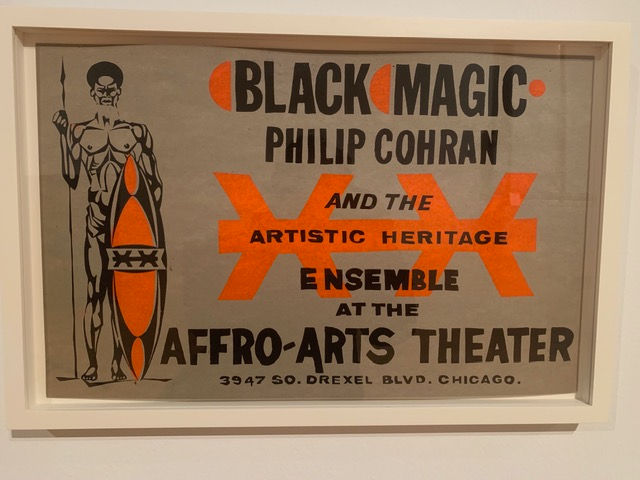
Cohran was instrumental in shaping Chicago’s cultural landscape during a transformative period in African American artistic expression. He founded the Affro-Arts Theater, a vital gathering place for musicians, artists, intellectuals, and community members, and led the Artistic Heritage Ensemble, through which he explored the relationship between African diasporic traditions, contemporary jazz, and cultural identity.
His recordings, including The Malcolm X Memorial (A Tribute in Music), On the Beach, Spanish Suite, and Armageddon, reflected his commitment to music as a form of historical remembrance, cultural affirmation, and social consciousness. Through performances and community-based initiatives, Cohran helped establish an artistic language that honored ancestral traditions while embracing innovation.
His pioneering outdoor concerts at Chicago’s 63rd Street Beach, known as the “On the Beach” concerts, became part of the broader cultural ferment that helped shape the city’s Black arts movement. The era’s artistic activism found expression in projects such as Chicago’s celebrated Wall of Respect, a landmark mural dedicated to Black cultural achievement.
Cohran was also among the founding figures of the Association for the Advancement of Creative Musicians (AACM), an organization that became internationally influential for its support of artistic independence, experimentation, and the development of original musical voices. The AACM’s early gatherings, including meetings held in Cohran’s home, reflected his belief that artists could build their own institutions, preserve their creative autonomy, and serve their communities without surrendering their vision.
Through his ensembles, theater, recordings, and cultural organizing, Cohran helped create spaces in which Black history, musical innovation, and intellectual independence could flourish.
The Musician and Inventor
An adventurous instrumentalist and composer, Cohran performed on trumpet and cornet and explored a wide range of instruments, including harp, zither, kalimba, percussion, and flute. He became particularly known for the Frankiphone, his distinctive electric kalimba invention, which produced resonant, otherworldly sounds that expanded the expressive possibilities of his music.
His innovative approach to instrumentation reflected a larger philosophy: that music could serve as a meeting place for traditional knowledge, scientific curiosity, and contemporary experimentation. Cohran did not regard instruments merely as tools for performance. He saw them as pathways to discovery, capable of revealing new relationships among sound, mathematics, nature, and the human spirit.
His work with the Sun Ra Arkestra, his leadership of the Artistic Heritage Ensemble, and his later projects with Kelan Phil Cohran and Legacy demonstrated a musical imagination that was both deeply rooted and boldly exploratory.
His compositions continue to invite listeners into a world where rhythm, melody, history, and cosmology exist in meaningful conversation.
An Educator and Community Builder
For Cohran, education was not simply a profession; it was a lifelong responsibility. He taught music formally and informally in schools, colleges, community centers, correctional institutions, youth programs, and independent cultural organizations throughout Chicago. His teaching included work at Malcolm X College, Olive-Harvey College, and the Center for Inner City Studies at Northeastern Illinois University.
His educational philosophy emphasized discipline, self-determination, historical understanding, intellectual curiosity, and service to the community. He challenged students to look beyond technical proficiency and to understand the deeper cultural, social, and personal responsibilities that accompany artistic expression.
Cohran’s teaching was famously rigorous. He expected dedication, consistency, and a willingness to pursue excellence. Yet his demands were rooted in a larger purpose: helping individuals recognize their capabilities, cultivate independent thought, and develop the discipline necessary to fulfill their potential.
He taught that music was far more than entertainment. It could be a source of healing, a means of personal development, a vehicle for social responsibility, and a pathway toward spiritual growth.
Through community youth ensembles, brass training groups, family ensembles, and educational programs, Cohran mentored generations of Chicago musicians. His influence extended to individuals whose lives were transformed not only by what he taught them about music, but also by what he taught them about history, culture, responsibility, perseverance, and the importance of contributing to something greater than oneself.
Scholar, Musicologist, Historian, and Cultural Philosopher
Cohran’s intellectual pursuits were as expansive as his musical imagination. A self-directed scholar with a deep commitment to lifelong learning, he investigated African civilizations, comparative musicology, mathematics, geometry, astronomy, cosmology, language, health, spirituality, and the historical foundations of Black cultural identity.
He was particularly interested in the ways knowledge systems could illuminate one another. His studies of musical harmony and historical music theory informed his compositions, while his explorations of mathematics and geometry encouraged him to consider the patterns and structures underlying sound and nature.
Among the works that influenced his musical thinking was the sixteenth-century treatise on harmony by Italian music theorist Gioseffo Zarlino. Cohran’s engagement with historical scholarship reflected his determination to investigate the intellectual foundations of music rather than accept conventional explanations without question.
He often described himself as a “sphereologist,” a term that expressed his interest in the relationships among spheres, patterns, natural phenomena, music, astronomy, and human development. Through this personal framework of inquiry, he sought to understand the universe as an interconnected whole.
His lectures, compositions, research, and community initiatives emerged from this expansive intellectual vision. For Cohran, knowledge was not divided into isolated disciplines. Music, science, history, philosophy, and spirituality were complementary avenues through which humanity could deepen its understanding of existence.
Astronomy and African Skies: Music in Conversation with the Cosmos
Astronomy occupied a special place in Cohran’s life and intellectual work. His fascination with the heavens reflected his broader interest in humanity’s relationship to the universe and the historical knowledge systems through which different civilizations interpreted the stars.
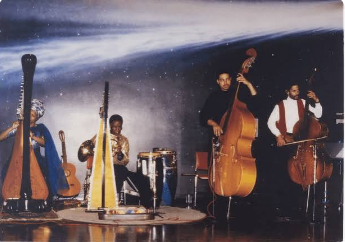
In 1993, Cohran created African Skies, a distinctive musical work associated with Chicago’s Adler Planetarium. Recorded with Kelan Phil Cohran and Legacy, the project brought together music, celestial inquiry, African cultural history, and spiritual reflection.
Featuring instruments such as the harp, Frankiphone, kalimba, trumpet, flute, and percussion, African Skies invites listeners to contemplate the connections between the natural world, ancestral knowledge, and the cosmos. Its compositions, including “White Nile,” “The Dogon,” “Sahara,” and “Kilimanjaro,” evoke African geography and cultural memory while reflecting Cohran’s enduring fascination with humanity’s place in the universe.
The project stands as a particularly revealing expression of his philosophy: that music and scientific inquiry need not occupy separate worlds. Both, in his view, offered ways to observe patterns, ask profound questions, and explore the mysteries of existence.
Through African Skies, Cohran extended his educational mission into a cosmic dimension, inviting audiences to consider the heavens not merely as distant objects of observation, but as part of a larger conversation about culture, knowledge, and humanity.
Health, Nutrition, Meditation, and the Healing Arts
Cohran’s interests in human development extended beyond music and astronomy into questions of wellness, nutrition, spiritual discipline, and the relationship between the individual and the natural world.
His studies reflected a holistic outlook in which physical well-being, intellectual development, emotional balance, and spiritual awareness were interconnected aspects of human life. He explored traditions and ideas that encouraged personal discipline, self-knowledge, and a thoughtful approach to everyday living.
Cohran was mentored by Sri Nerodi, an East Indian yoga teacher associated with teachings on healthy eating and vegetarianism. This relationship formed part of his broader exposure to philosophical and spiritual traditions beyond his immediate cultural environment.
His interest in healing and wellness was consistent with his belief that knowledge should have practical value in human life. Just as he regarded music as a means of personal and collective transformation, he explored how habits, reflection, and the pursuit of understanding could contribute to human development.
These dimensions of his life deserve continued documentation through family archives, recollections from students and relatives, and any surviving lectures, notes, and personal writings. Preserving this material can help future generations understand the full breadth of his thought and the connections he drew among health, music, spirituality, and cultural knowledge.
Family, Fatherhood, and the Hypnotic Brass Ensemble
Perhaps nowhere was Cohran’s commitment to education and cultural continuity more evident than within his own family. He raised a large family and taught his children music, discipline, perseverance, and cultural responsibility from an early age. His home became an environment in which artistic practice was woven into daily life and musical excellence was pursued through sustained work.
His approach to fatherhood reflected the same demanding principles that characterized his teaching. Music lessons and rehearsals required commitment, preparation, and repetition. Through this process, his children encountered not only the practical foundations of musicianship but also the values that Cohran believed were essential to personal and collective achievement.
Eight of his sons became members of the Hypnotic Brass Ensemble, carrying elements of their father’s musical philosophy to audiences around the world. The group developed a distinctive sound that combines brass-band traditions, funk, jazz, and hip-hop influences, building an international following through recordings, collaborations, and performances.
Their music has reached broad audiences through festival appearances, collaborations with internationally recognized artists, and film placements, including the appearance of their song “War” in The Hunger Games.
The ensemble’s achievements represent more than a family’s musical success. They embody Cohran’s belief that cultural knowledge must be practiced, transmitted, and renewed across generations. His sons have developed their own artistic identities while continuing to acknowledge the influence of the musical and philosophical foundation he established.
Through the Hypnotic Brass Ensemble and the many members of his family who carry forward his teachings, Cohran’s legacy remains a living tradition rather than simply a chapter in musical history.
A Lasting Legacy of Artistic Excellence and Cultural Stewardship
Kelan Phil Cohran’s influence cannot be measured by recordings or performances alone. His legacy lives in the institutions he helped establish, the musicians he mentored, the students he challenged, the instruments he invented, the ideas he explored, and the family he prepared to carry his work forward.
His contributions helped strengthen Chicago’s Black cultural institutions and advance a vision of artistic independence that continues to inspire musicians and cultural organizers. His relationship with the AACM, his leadership of the Artistic Heritage Ensemble, his founding of the Affro-Arts Theater, and his influence on artists connected to the Chicago music community all form part of this enduring contribution.
His influence also extended through musicians associated with Earth, Wind & Fire. Inspired after learning about the Frankiphone through visits to the Affro-Arts Theater, founder Maurice White incorporated its distinctive sound into the band's musical vocabulary, helping to broaden the reach of Phil Cohran's instrumental innovations and creative ideas. Additionally, several members of Earth, Wind & Fire emerged from Cohran's Artistic Heritage Ensemble, carrying the group's musical foundations onto a world-renowned stage.
His final decades brought renewed attention to the breadth of his accomplishments, including his work with his sons, his continued research, and the release and reissue of recordings that introduced his music to new listeners.
On May 8, 2017, a celebration of his ninetieth birthday brought together musicians, students, family members, and admirers to recognize his extraordinary contributions. He was honored with the "Steve Reid Foundation Achievement Award," which is only given to people who have devoted their lives to music. Excerpts of their letter to Cohran states: "We honor and celebrate you and the amazing contribution you have made throughout life to music, art and culture. Many have described you as a visionary, a creative genius and a cultural giant. As such, you have inspired millions of lives through your music." The tribute reflected the esteem in which he was held by Chicago’s creative music community.
Cohran passed away on June 28, 2017, leaving behind an extraordinary body of work and an intellectual and cultural legacy that continues to unfold.
Preserving the Vision
To remember Kelan Phil Cohran is to remember a man who refused to separate art from knowledge, creativity from discipline, or individual achievement from community responsibility.
He approached music as a living archive of cultural memory, a field of intellectual exploration, and a force capable of inspiring transformation. He approached education as a lifelong obligation. He approached family as a foundation for cultural continuity. And he approached the universe with the curiosity of a scholar, the imagination of an artist, and the determination of a teacher committed to sharing what he learned.
His life reminds us that true legacy is not limited to what one creates, but also includes what one teaches, what one preserves, and what one makes possible for others.
Through his music, inventions, scholarship, institutions, students, and descendants, Kelan Phil Cohran continues to speak across generations. His work stands as a testament to the power of independent thought, the richness of African cultural knowledge, and the enduring possibilities that emerge when art, science, history, and spirituality are brought into conversation.
His legacy is not simply remembered. It is studied, performed, questioned, practiced, and carried forward.
In honoring Kelan Phil Cohran, we honor a life devoted to discovery, cultural preservation, artistic freedom, and the belief that knowledge becomes most powerful when it is shared with future generations.
Written by:
Achaia I. Moore
Granddaughter of Kelan Phil Cohran; Daughter of Pernell and Penta Cohran Moore


